How Having a Dog Enhances Your Child’s Childhood: Science-Backed Benefits
There’s something truly special about watching a child interact with a dog—the laughter, the cuddles, the endless energy. As a Golden Retriever breeder and a homeschool mom, I see firsthand how dogs can positively influence children’s growth, development, and character. Beyond the joy and companionship, research supports the many ways having a dog can enhance a child’s life.
In this post, we’ll explore how dogs enrich childhood and the scientific evidence that shows the tangible benefits of growing up with a furry friend.
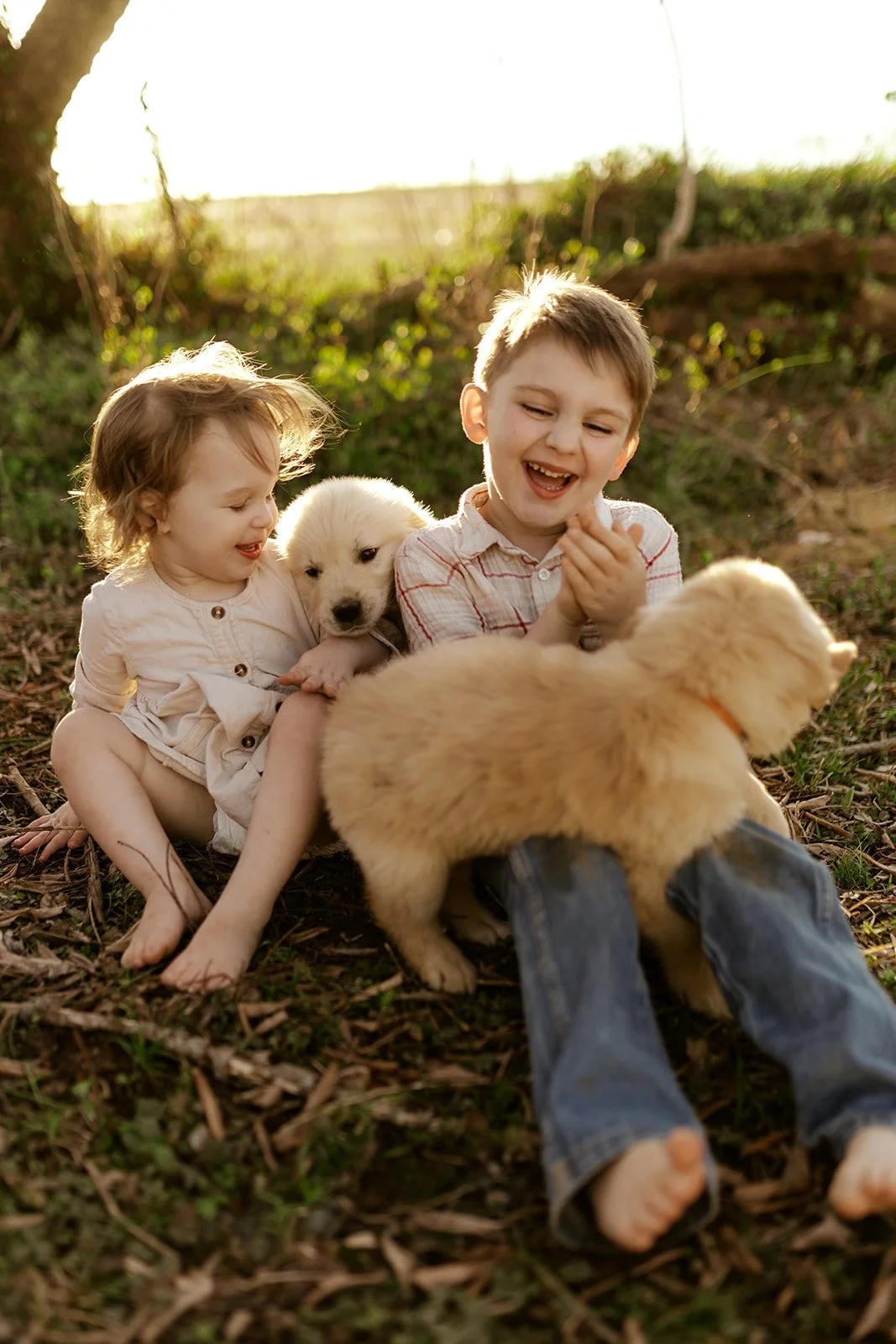
Emotional and Social Development
Children who grow up with dogs often show stronger emotional intelligence and social skills. Dogs provide unconditional love, which helps children learn empathy, patience, and compassion.
Science-Backed Evidence:
A study published in PLOS One (2015) found that children with pets, particularly dogs, showed higher levels of empathy compared to those without pets.
Dogs serve as a non-judgmental presence, helping children regulate emotions and cope with stress, according to research in Frontiers in Psychology (2019).
The daily routines of caring for a dog—feeding, walking, grooming—also teach responsibility and consistency, which are foundational to emotional development.

Physical Health and Activity
Dogs are natural motivators for physical activity. Children with dogs tend to get more exercise, whether through walks, playtime in the yard, or training games.
Science-Backed Evidence:
The American Heart Association notes that dog ownership is associated with increased physical activity, which promotes cardiovascular health.
Research from BMC Public Health (2017) found that children with dogs were more likely to meet daily activity recommendations, supporting healthy growth and weight management.
Active play with a dog also improves coordination, balance, and gross motor skills, helping children develop physically in fun, engaging ways.
Cognitive and Learning Benefits
Growing up with a dog can also support cognitive development and learning by providing opportunities for problem-solving, responsibility, and structured routines. Children learn to follow schedules for feeding, potty breaks, and training sessions, which strengthens executive functioning skills like planning and organization. Additionally, interacting with a dog—through play, obedience exercises, and even reading aloud—can enhance focus, memory, and critical thinking, all while making learning engaging and hands-on.
Science-Backed Evidence:
Studies indicate that reading to dogs can improve literacy skills. Children who read aloud to a dog often show increased reading confidence and fluency (Anthrozoös, 2012).
The structured routines of caring for a pet enhance executive functioning skills, such as planning, organizing, and time management.
Additionally, problem-solving skills are strengthened when children participate in training exercises or figure out how to help their dog navigate new experiences.

Immune System and Allergies
Contrary to old myths that pets increase allergies, early exposure to dogs can actually help strengthen a child’s immune system by introducing a wider variety of microbes into their environment. Studies show that children who grow up with dogs are exposed to different bacteria that help train the immune system to respond appropriately, potentially lowering the risk of developing allergies or asthma. In addition, regular interaction with a dog encourages outdoor play and contact with diverse environments, which can further support immune resilience and overall health.
Science-Backed Evidence:
Research published in JAMA Pediatrics (2015) found that children exposed to pets in early life had a lower risk of developing allergies and asthma.
Interaction with dogs can increase microbial diversity in the home, which helps the immune system learn to respond appropriately to allergens.
Growing up around a dog can make children more resilient and better equipped to handle minor illnesses and environmental challenges.
Mental Health Benefits
Dogs provide comfort, companionship, and stability, which can have a meaningful impact on a child’s mental health. Their consistent presence offers a source of emotional support, helping children feel safe and secure during stressful or uncertain situations. Interacting with a dog has been shown to reduce stress hormones, increase feelings of calm, and boost levels of oxytocin—the “bonding hormone”—in both children and adults. Beyond stress relief, having a dog encourages social interaction, play, and routine, all of which contribute to improved mood, reduced feelings of loneliness, and the development of healthy coping strategies.
Science-Backed Evidence:
Studies show that oxytocin levels increase in children when interacting with dogs, promoting bonding and reducing stress (Hormones and Behavior, 2014).
Children with dogs report lower feelings of loneliness and anxiety, according to research in BMC Psychiatry(2019).
The presence of a dog can create a safe emotional space for children to express feelings, learn coping strategies, and feel supported during challenges.
Building Character and Life Skills
Beyond measurable health and cognitive benefits, dogs help children develop character traits and life skills:
Responsibility and accountability through daily care
Empathy and compassion toward all living beings
Patience, problem-solving, and perseverance
Leadership and confidence as they guide training and play
These lessons often leave lasting impressions that children carry into adulthood.

Conclusion
Having a dog as part of a child’s life offers far more than companionship—it enhances emotional, social, cognitive, and physical development. Science continues to back up what many families intuitively know: dogs help children grow into empathetic, responsible, and confident individuals.
For families considering a Golden Retriever, these dogs are especially well-suited for children due to their gentle temperament, patience, and love for interaction. Growing up with a dog isn’t just fun—it’s an investment in your child’s holistic development.
Interested In a Puppy?
If your interest in getting a puppy from us make sure you check out our Upcoming Litter Page!