Understanding Puppy Mouthiness (And How to Guide Gentle Play)
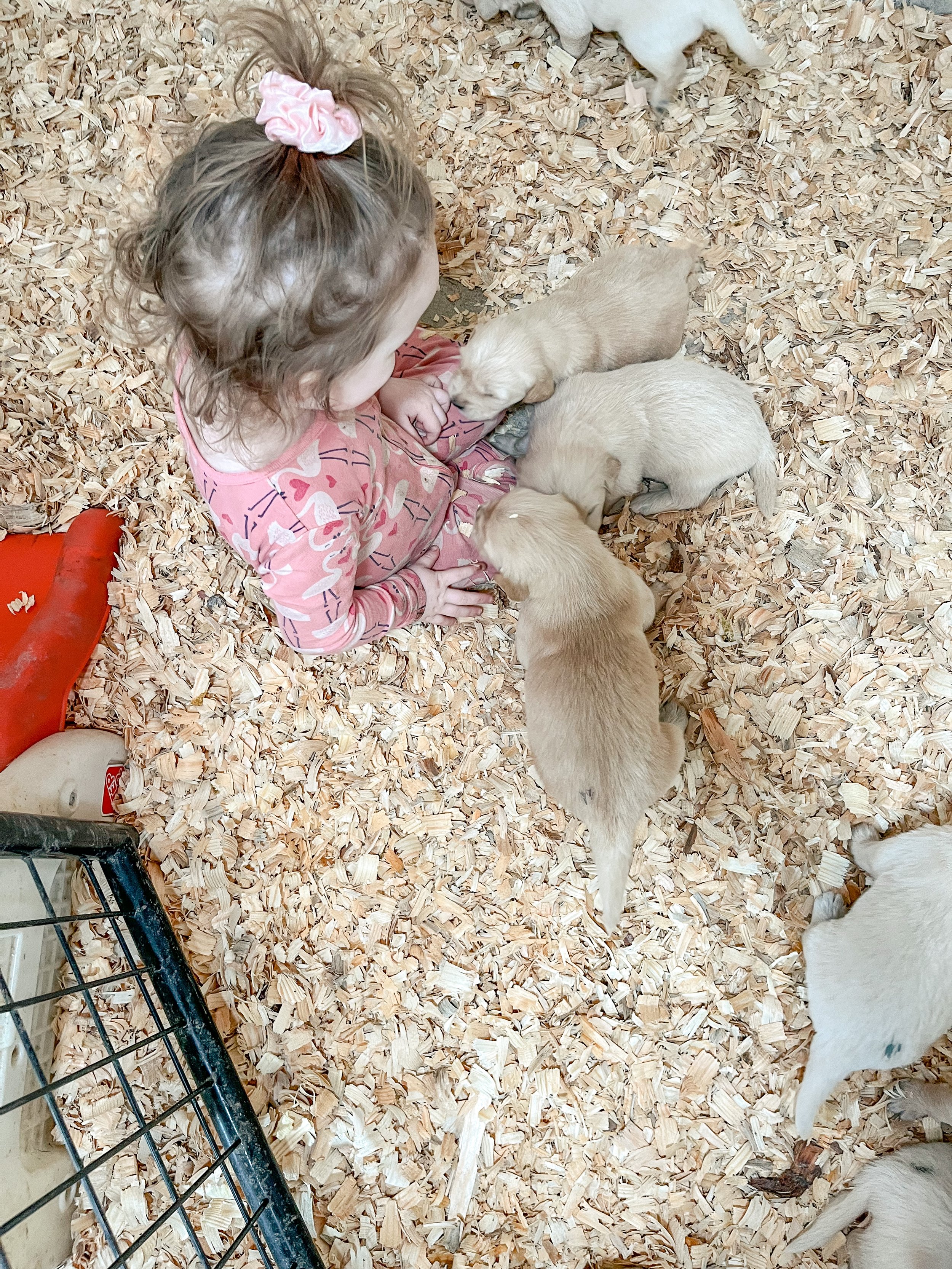
Puppy mouthiness is one of the most common concerns new families reach out about, especially during those first few weeks at home. The emails usually sound the same: “He’s so sweet… but he won’t stop biting.” Or, “Is this normal?”
Yes. It’s normal. And it’s also something that needs gentle, consistent guidance.
If you understand what’s actually happening developmentally, puppy mouthiness becomes far less frustrating — and much easier to shape into the kind of behavior you want long term.
Let’s talk about why it happens and how to guide it well.
Why Puppy Mouthiness Happens
Puppies explore the world with their mouths. That’s not bad behavior. That’s biology.
Between about 3 and 6 months, they’re also teething. Just like human babies, that process can be uncomfortable. Chewing relieves pressure in the gums and helps those adult teeth come in properly. According to the American Kennel Club, puppy biting and mouthing are normal developmental stages, especially during teething (you can read more here: https://www.akc.org/expert-advice/training/stop-puppy-biting/).
But beyond teething, puppies also use their mouths during play. When they interact with their littermates, they wrestle, grab, tumble, and yes — bite. That’s how they learn bite inhibition. If one puppy bites too hard, the other yelps and stops playing. That feedback teaches softness.
When your puppy comes home, you become the new teacher.
Not All Mouthiness Is Equal
This is important.
There’s a difference between normal puppy mouthiness and frantic, overstimulated biting. A well-bred, stable Golden Retriever puppy will still mouth — but there’s usually a softness to it. There’s responsiveness. When guided consistently, they adjust.
If a puppy becomes wild-eyed, jumps repeatedly, grabs clothing, and escalates when redirected, that’s often overtiredness or overstimulation. Puppies need far more sleep than most people realize — often 18–20 hours a day. When they don’t get it, their behavior spirals.
Before assuming your puppy is “aggressive,” ask:
Has he napped?
Has the environment been calm?
Has he had structured play?
Most biting spikes happen when puppies are exhausted.
How to Guide Gentle Play
You don’t need harsh corrections to teach softness. In fact, harshness often increases excitement.
Instead, focus on clarity and consistency.
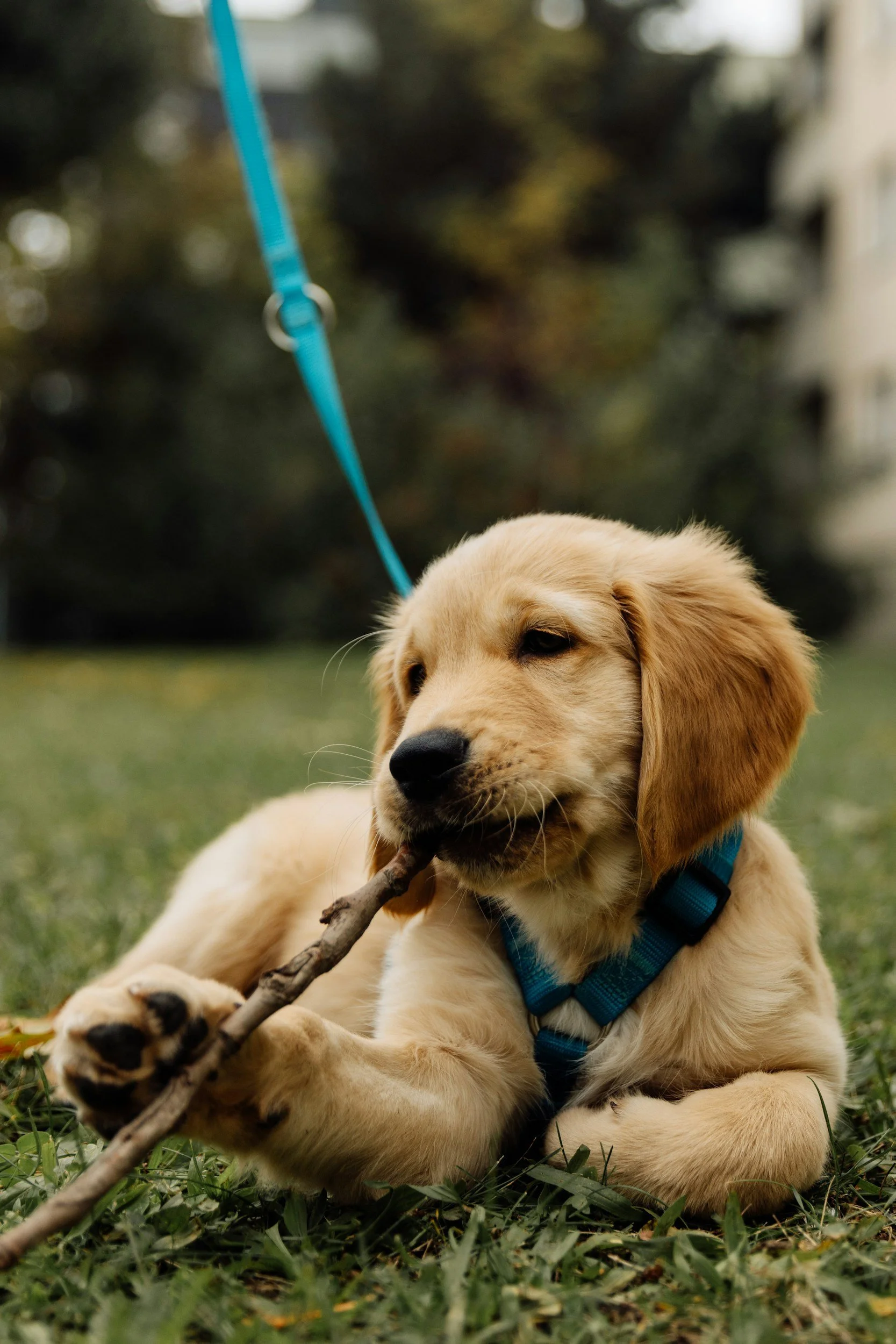
First, redirect. If teeth touch skin, calmly offer a toy. Not in a frantic way — just a simple trade. Over time, your puppy learns that toys are appropriate outlets, hands are not.
Second, end play when needed. If mouthing escalates, stand up, fold your arms, and disengage for 10–20 seconds. No drama. No yelling. Just remove attention. Puppies are incredibly attuned to social feedback. When fun stops, they notice.
Third, reward softness. This is the piece people skip. When your puppy licks instead of bites, when he plays gently, when he chooses a toy on his own — mark it with calm praise. That’s how behaviors stick.
Consistency matters more than intensity.
Teaching Bite Inhibition the Right Way
Bite inhibition is the ability for a dog to control the pressure of their mouth. Even adult dogs use their mouths in play — but a well-taught dog has a soft grip.
One mistake families make is trying to eliminate all mouthing immediately. Instead of teaching pressure control, they focus only on stopping behavior altogether. The goal isn’t zero mouth use overnight. The goal is teaching gentle.
If your puppy grabs your hand, instead of jerking away (which can trigger prey drive), stay still and calmly say “gentle.” When the pressure decreases, softly praise. That timing is everything.
Veterinary behavior resources like VCA Animal Hospitals also explain that structured redirection and calm disengagement are more effective than punishment during the teething phase (https://vcahospitals.com/know-your-pet/puppy-behavior-and-training-biting-chewing-and-mouthing).
Gentle guidance builds long-term stability.
The Role of Breeding and Temperament
This part matters more than people realize.
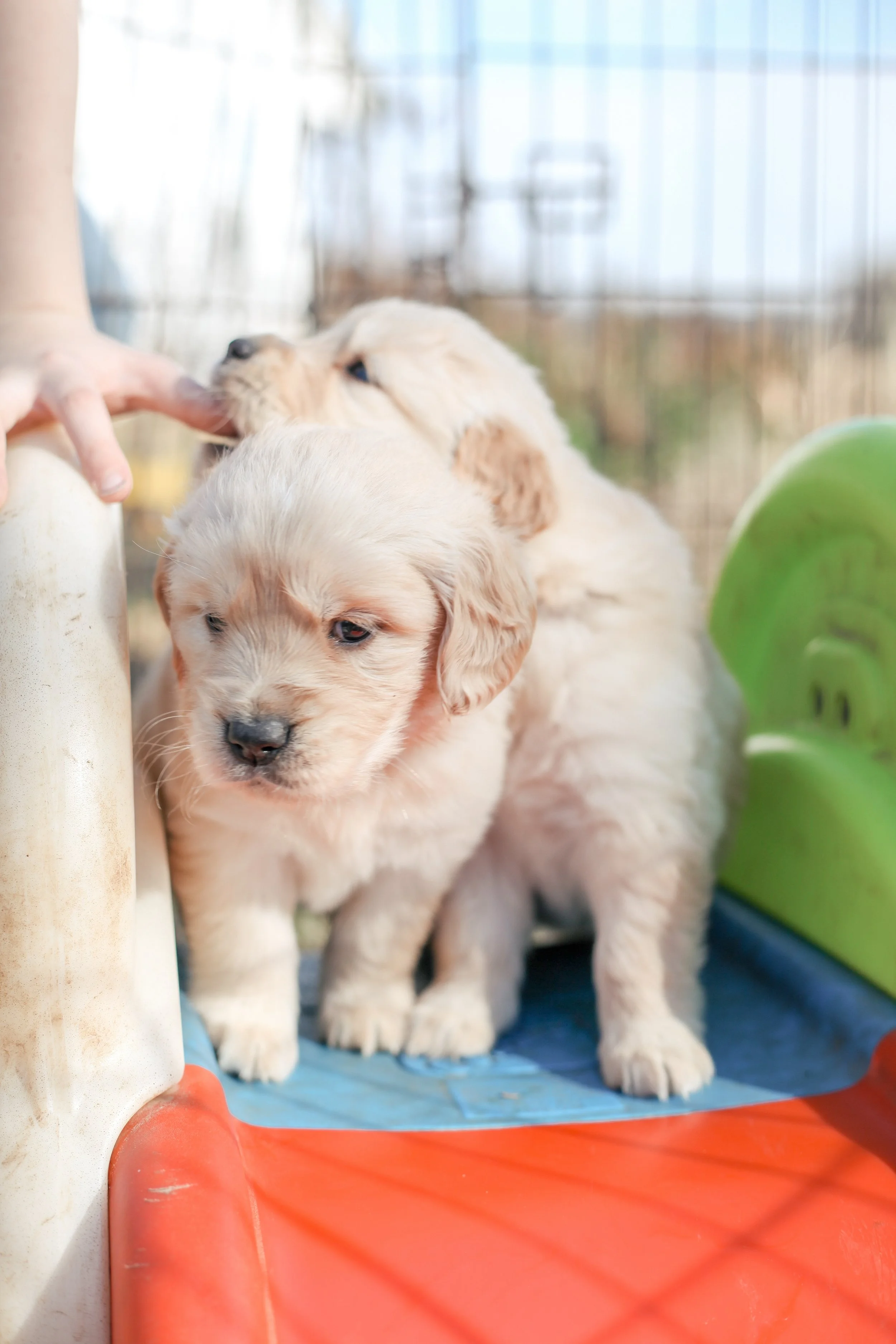
All puppies mouth. But intensity, recovery time, and responsiveness are heavily influenced by genetics. A balanced Golden Retriever temperament makes guidance easier because the puppy is wired to work with you, not against you.
When families tell me their puppy redirects easily and settles well, that’s not an accident. Early neurological stimulation, structured socialization, and thoughtful breeding decisions all play a role in how manageable puppy mouthiness feels at home.
Training shapes behavior. Genetics influence how smoothly that training goes.
Practical Tips for the Teething Phase
Here are a few simple strategies that help tremendously:
Rotate chew toys so they stay novel.
Offer cold washcloths (supervised) for gum relief.
Keep play sessions short and structured.
Enforce naps in a crate or quiet space.
Avoid rough hand games that encourage grabbing.
If you allow wrestling with hands one day and correct it the next, puppies get confused. Clarity builds confidence.
And remember — this phase passes. Most significant puppy mouthiness improves dramatically after adult teeth finish coming in, usually around 5–6 months.

When to Be Concerned
True aggression in young puppies is rare. What people often label as aggression is usually overstimulation, poor sleep, or inconsistent boundaries.
However, if a puppy:
Growls over food with stiffness
Freezes and guards objects intensely
Shows repeated, escalating behavior without recovery
That warrants professional guidance.
But the vast majority of families dealing with puppy biting are simply walking through a normal developmental stage.
The Long-Term View
It’s easy to get discouraged when your sweet puppy suddenly feels like a tiny shark. But this stage is temporary. What matters most is how you respond to it.
Calm guidance teaches self-control. Consistency teaches predictability. Structure teaches security.
And one day, often sooner than you expect, you’ll realize the biting has faded into gentle play, soft mouth retrieves, and that signature Golden affection.
Puppy mouthiness isn’t a flaw. It’s a phase. When handled thoughtfully, it becomes part of the foundation for a stable, trustworthy adult dog.